Tea in the Vietnam War: Smokeless Stoves, Brew Ups and Beer
Tea in the Vietnam War: smoke gave soldiers away. How a Vietnamese army cook hid his fire, how Australians brewed up on patrol, and what to drink.
What tea goes with this campaign?
— War and Tea (@TeaAndWar) October 9, 2026
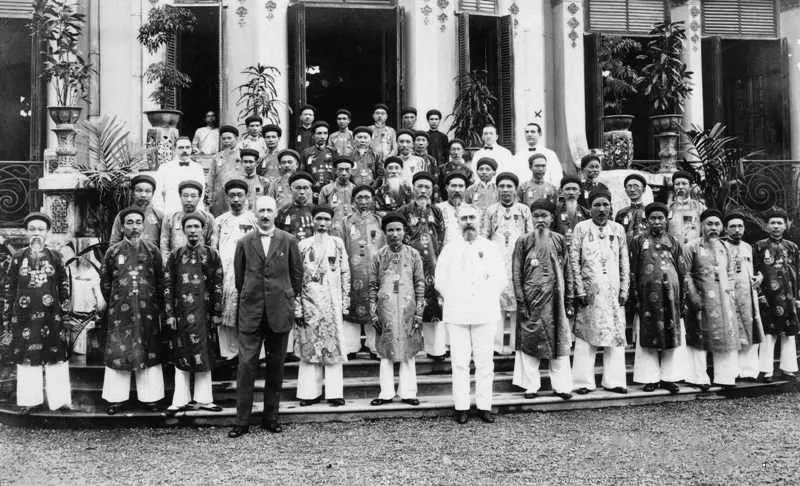
Indochina, 1954, by Robert Capa.
Earlier this month I posted this photo by Robert Capa and asked what tea goes with it. Capa took photos of the French war in northern Vietnam in May 1954, days before a landmine killed him there. That war is where this story starts.
In my Cossacks story, the question was what soldiers drank. In Vietnam, the question was different. How do you boil water without getting killed for it? Every fire makes smoke, and smoke shows a pilot exactly where you are. So both sides of the Vietnam War had to solve the same problem. They just solved it in very different ways, and that is the story of tea in the Vietnam War.
Some product links in this post go through my ShopMy shop and may earn me a small commission, at no extra cost to you.
A cook who hid the smoke
The story starts before the Americans arrived, in the war against France. In 1951 and 1952, during the Hoa Binh campaign, an army cook named Hoang Cam watched the smoke from his kitchen fires rise over the forest. French spotter planes saw it, and bombers soon followed. Many of his comrades died this way.
At first, the cooks tried cooking only at night. However, the firelight gave them away instead. When a plane came over, they put the fire out, and the soldiers ate half-cooked rice.
So Hoang Cam started digging. He tried dozens of test stoves in the hillsides until one worked. The fire sat in a pit. Long channels ran away from it underground, covered with branches and wet earth. The smoke crawled through them and seeped out as a thin haze near the ground. Meanwhile, the flames stayed hidden below.
In October 1952, the army named it the Hoang Cam stove. Ho Chi Minh had already written an article praising the cook. Later, General Giap mentioned the stove in his memoir of Dien Bien Phu, where cooks dug it all along the lines.
From army hero to ice-cream sticks
There is a twist, though. After the war, Hoang Cam left the army as a lieutenant. He went to work in a village cooperative. There, he taught his neighbours to make ice-cream sticks out of bamboo. Then he took them by bicycle to an ice-cream shop in Hanoi. In total, the co-op is said to have sold twelve tonnes of them.
“Cook without smoke” on the Ho Chi Minh Trail
Still, his stove outlived the war it was made for. When the war with the Americans began, North Vietnamese soldiers dug it all along the Ho Chi Minh Trail. It even became part of their motto: march without a trace, cook without smoke.
Veterans still give it credit. One remembers that his unit had hot food and boiling water even during heavy fighting. Another says the American spotter planes never found their kitchens.
Boiling water was not only for tea, of course. It cooked the rice and kept soldiers warm in the mountain winters. It also let medics sterilise their tools.
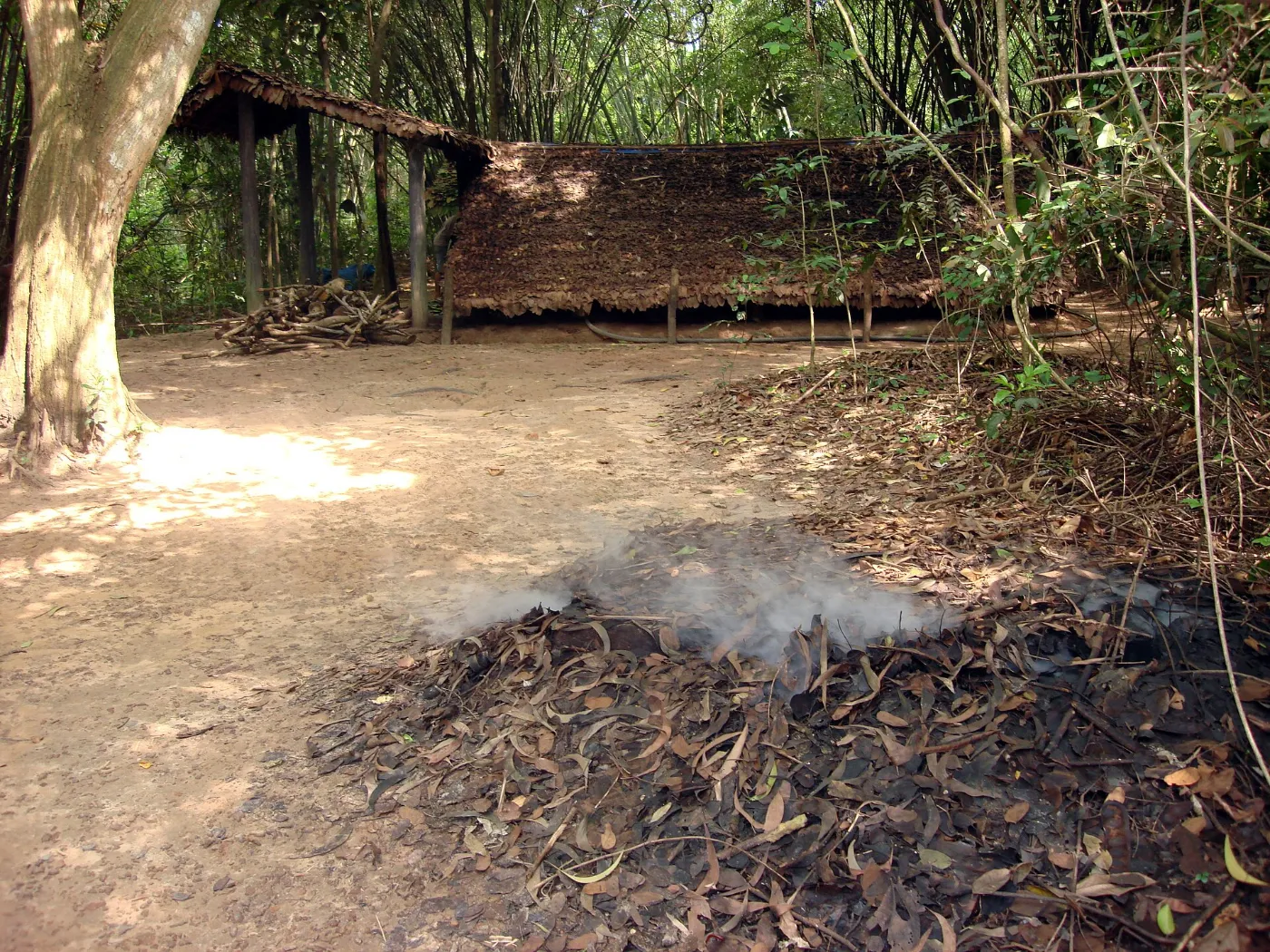
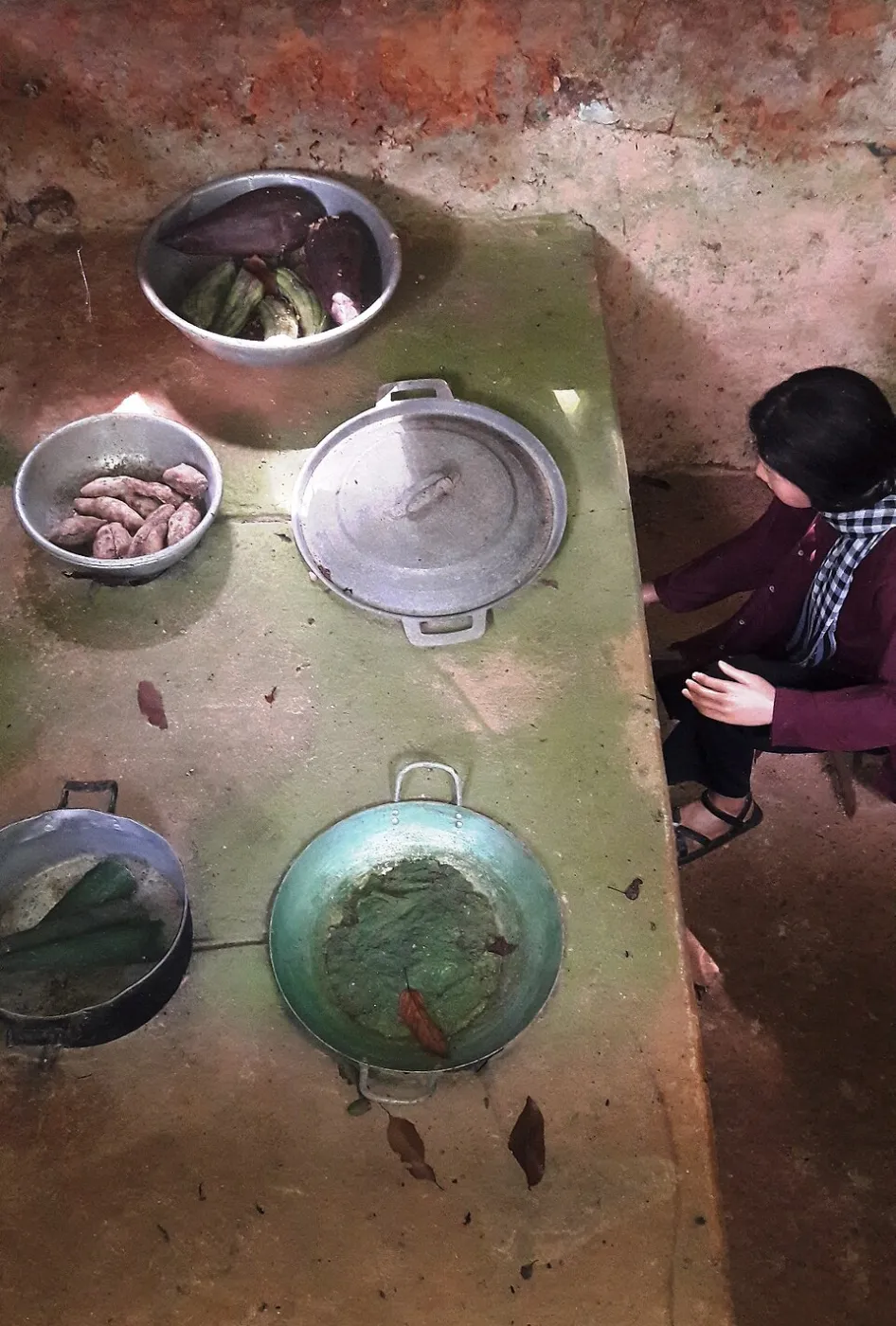
The guerrillas also built a Hoang Cam kitchen into the Cu Chi tunnels outside Saigon. Today, Vietnamese recruits still learn to dig one. And if you visit Cu Chi now, the tour usually ends at a rebuilt tunnel kitchen. There, you get boiled cassava and a cup of hot tea.
How did Australian soldiers make tea in Vietnam?
Australian and New Zealand soldiers had the same problem. Their base was in Phuoc Tuy province, southeast of Saigon. Their answer, however, was much simpler.
They carried a small folding metal stove, the hexamine stove. It burned blocks of solid fuel with almost no smoke. You filled your canteen cup with water and set it right on the flame. A few minutes later, you had a brew.
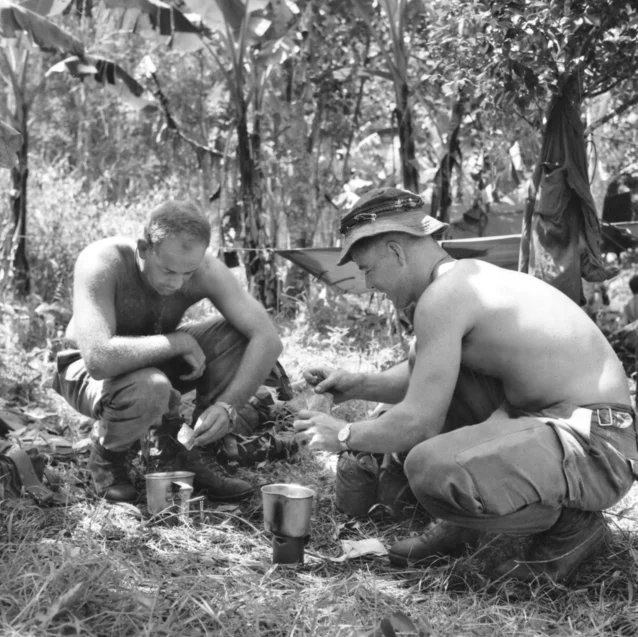
The ration pack held tea, coffee, sugar and a tube of sweetened condensed milk. One Australian platoon commander later wrote that the condensed milk was worth its weight in gold. After all, it made a decent brew possible. A New Zealand soldier remembered his own country’s ration packs as mostly bad, except for the chocolate, condensed milk and tea.
A brew up in the enemy’s shelter
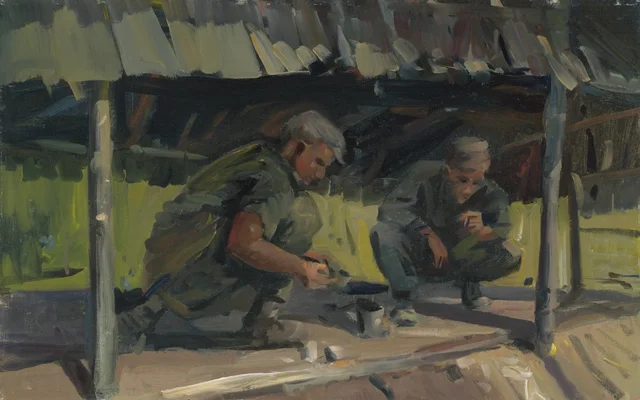
My favourite picture of all this is a small oil painting from 1967. The war artist Ken McFadyen called it Brew up. In it, two Australian soldiers on patrol make a meal inside a Viet Cong shelter, a log frame with a leaf roof over a bunker. In other words, the enemy built the shelter, and the Australians stopped in it for a brew.
Tea on patrol, beer at the base
This is where it starts to sound like the Russian army story. Russian soldiers got vodka, but they wanted tea. Australian soldiers, on the other hand, could not drink alcohol on operations. So in the jungle, they drank tea or coffee.
Back at base, it was beer, and a lot of it. According to the official history of the Australian Army in Vietnam, canteens received 7.5 million cans of beer in six months of 1969. At the time, there were about 7,500 soldiers. That works out to five to six cans per man, per day.
Commanders tried a limit of two cans a day. However, soldiers simply saved theirs up on patrol. Then they drank them all when they got back.
What happened to Vietnam’s own tea?
Vietnam has grown and drunk tea for centuries. The French also set up tea plantations from the late 1800s, and tea stayed part of court life in Hue.
The wars hit the tea industry, but not the way you might expect. According to a 2007 survey in the International Journal of Tea Science, the tea market collapsed during the war with France. Most plantations were abandoned. Then, between 1960 and 1970, farmers planted more than 14,000 hectares of new tea. That was in the middle of the war with the Americans.
One French tea factory also kept going. Cau Dat, in the hills near Da Lat, opened in 1927 to make black tea for France. When the French left around 1960, Chinese merchants took it over. Today, people often call it the oldest working tea factory in Southeast Asia. In fact, some of its original European machines still run.
What to drink with this story
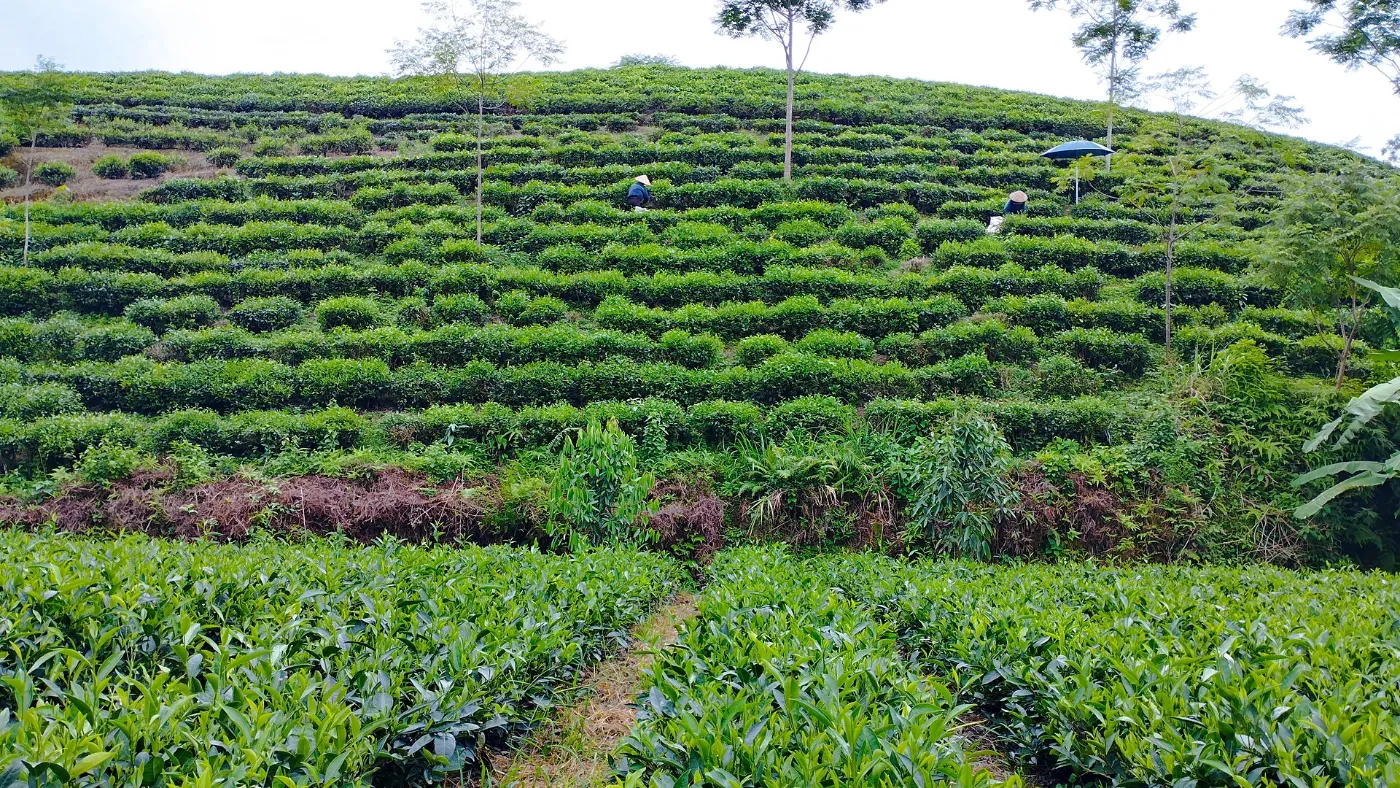
For Hoang Cam: Thai Nguyen green tea. This is the everyday green tea of northern Vietnam. It grows north of Hanoi, and the best comes from Tan Cuong. Brew it at about 80 °C in short steeps, and drink it plain. A kettle with a temperature setting, like the Fellow Stagg EKG, makes that easy. It tastes grassy and slightly bitter, with a sweet finish.
For the Australians: strong black tea with sweetened condensed milk. First, boil water in a metal mug. A plain steel camp mug like the Stanley Classic Camp Mug is the closest thing to a canteen cup. Next, add a big pinch of black tea or two tea bags. Finally, stir in a spoonful of condensed milk. It will be very sweet, and that is how they drank it.
Bring the story home. To cook Vietnamese food at home, try Andrea Nguyen’s Vietnamese Food Any Day or Nini Nguyen’s Dac Biet. And d’Annam, a fragrance house with Vietnamese roots, makes an “Enchanting Vietnam” discovery set that includes a scent called Monsoon Tea.
Questions about tea in the Vietnam War
A field stove invented in 1951–52 by Hoang Cam, a Vietnamese army cook. The fire burns in a pit and the smoke goes out through long underground channels covered with branches and wet earth, so only a thin haze reaches the surface and the flames stay hidden from planes. It was used at Dien Bien Phu, along the Ho Chi Minh Trail and in the Cu Chi tunnels, and the Vietnamese army still teaches it.
On a small folding hexamine stove that burned solid fuel blocks with very little smoke. They boiled water in their canteen cup and added tea or coffee, sugar and sweetened condensed milk from the ration pack.
At the Cu Chi tunnels near Ho Chi Minh City, where tours end with cassava and tea at a rebuilt kitchen, and at the Dien Bien Phu Victory Museum and the Dien Bien Phu campaign headquarters site.
Two cups: Thai Nguyen green tea, the everyday tea of northern Vietnam, brewed plain at about 80 °C; and strong black tea with sweetened condensed milk, the way Australian soldiers drank it.
Go deeper: What Cossacks and Russian Soldiers Really Drank · Russian Spirit of War and Tea
Sources
- Nguyen My Ha, “A Kitchen God: how a stove helped save lives”, Viet Nam News (2022)
- Article honouring the inventor of the Hoang Cam stove, Tien Phong (in Vietnamese)
- Australian War Memorial: Ken McFadyen, Brew up (1967); photograph CAM/67/1066/VN; hexamine stove, 6RAR
- R. A. Lambert, “Feed the man meat”, 5 RAR Association
- Lloyd Roberton, veteran’s memories, NZ History: Vietnam War
- Ashley Ekins with Ian McNeill, Fighting to the Finish (official history of the Australian Army in Vietnam, 2012), as reported by the Associated Press
- R. Dasgupta, “Tea in Vietnam”, International Journal of Tea Science 6, no. 2 (2007)