What Cossacks and Russian Soldiers Really Drank: Wine, Vodka and the Fight for Tea
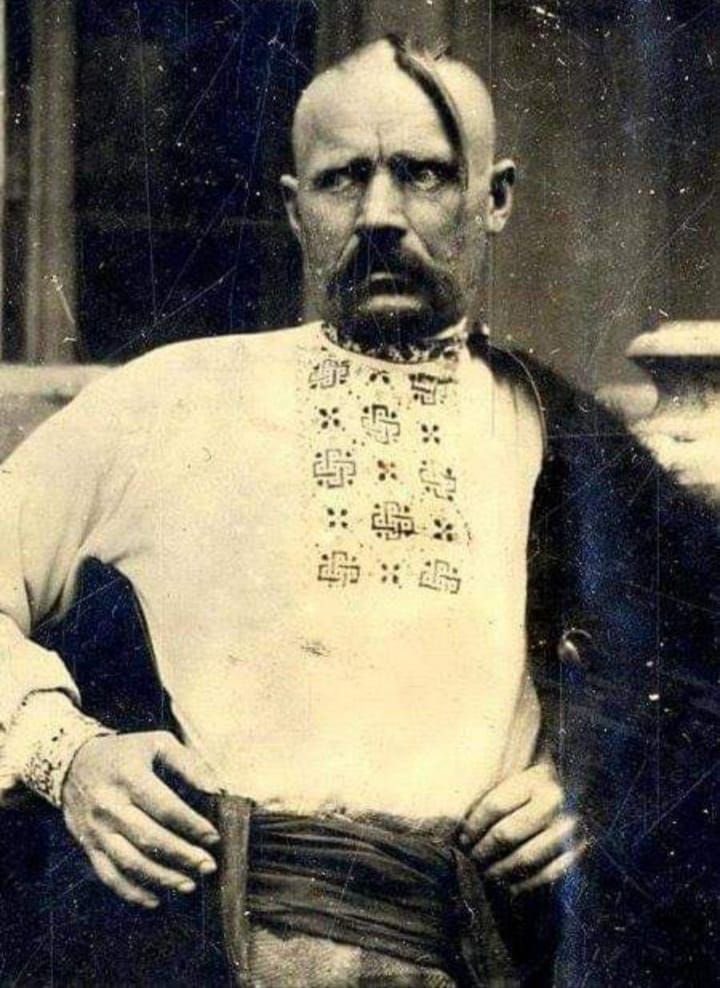
No idea why the Cossacks had a haircut like that but they for sure enjoyed tea.
— War and Tea (@TeaAndWar) June 15, 2026
In June I posted a photo of a Cossack and said they for sure enjoyed tea. Sixty-two thousand people saw it. Then I went looking for proof, and found I was mostly wrong. Most Cossacks drank wine, mead and vodka, and in one of Russia’s most famous novels a Cossack turns his nose up at tea. But a Cossack was also the first Russian ever to describe tea, and the story of tea in the Russian army turned out to be a fight that tea never quite won.
A Cossack was the first Russian to taste tea
In 1616, the governor of Tobolsk in Siberia sent a Cossack named Vasilii Tiumenets to the court of the Altan Khan in Mongolia. Tiumenets could not read or write, but when he got home he described the feast in detail: meat on white dishes, which were porcelain, then unknown in Muscovy, and a drink of milk boiled with butter and some kind of unfamiliar leaves. That is the earliest mention of tea in any Russian record. The khan even sent the first samples of tea back to the tsar.
The word itself came a little later. In 1639 the envoy Vasilii Starkov reported that the Mongols called the drink chai, the first appearance of the word in Russian. Starkov refused to drink it, and Russian envoys in the 1650s still dismissed tea as unknown and unnecessary. Over the next three centuries tea slowly went from foreign medicine to aristocratic luxury to everyday necessity. Only by the middle of the nineteenth century did Russians of every class drink it from the samovar, as strong zavarka diluted with hot water.
What did Cossacks drink? Mostly wine
The Don and Terek Cossacks lived in grape country. Their signature drink was chikhir, a young, cloudy red wine pressed from grapes grown in nearly every Terek homestead. Tolstoy put it on the page in The Cossacks, where the old hunter Eroshka drinks it by the bucket. For everyday thirst there was kvass and dried-fruit uzvar. The Zaporozhian Cossacks of the Dnieper drank horilka and mead, and by tradition they were expected to stay sober on campaign.
Russian writers noticed. In Pushkin’s The Captain’s Daughter (1836), the young hero offers a cup of tea to a bearded stranger he meets in a snowstorm. The man tastes it, grimaces and asks for vodka instead, because tea is not a drink for Cossacks. As the historian Audra Jo Yoder points out, Pushkin used tea and the samovar as a marker of polite Russian life, deliberately set apart from Cossack, Tatar and Kalmyk ways. So the honest pairing for my Cossack photo is a cup of chikhir.
The soldier’s ration: vodka, and a fight over tea
From Peter the Great onward, Russian soldiers received a charka of “bread wine”, as vodka was then called, and over the nineteenth century the ration was handed out less often and in smaller amounts. What happened next is where historians disagree. A study of soldiers’ food in the Russian army says the alcohol ration was abolished in 1908 and replaced with a daily ration of tea and sugar. Yoder, drawing on the Russian historian of the tea trade Sokolov, says the opposite: despite repeated calls, tea never became a regular ration, and the army handed it out only on special occasions and during cholera outbreaks, when the water was unsafe.
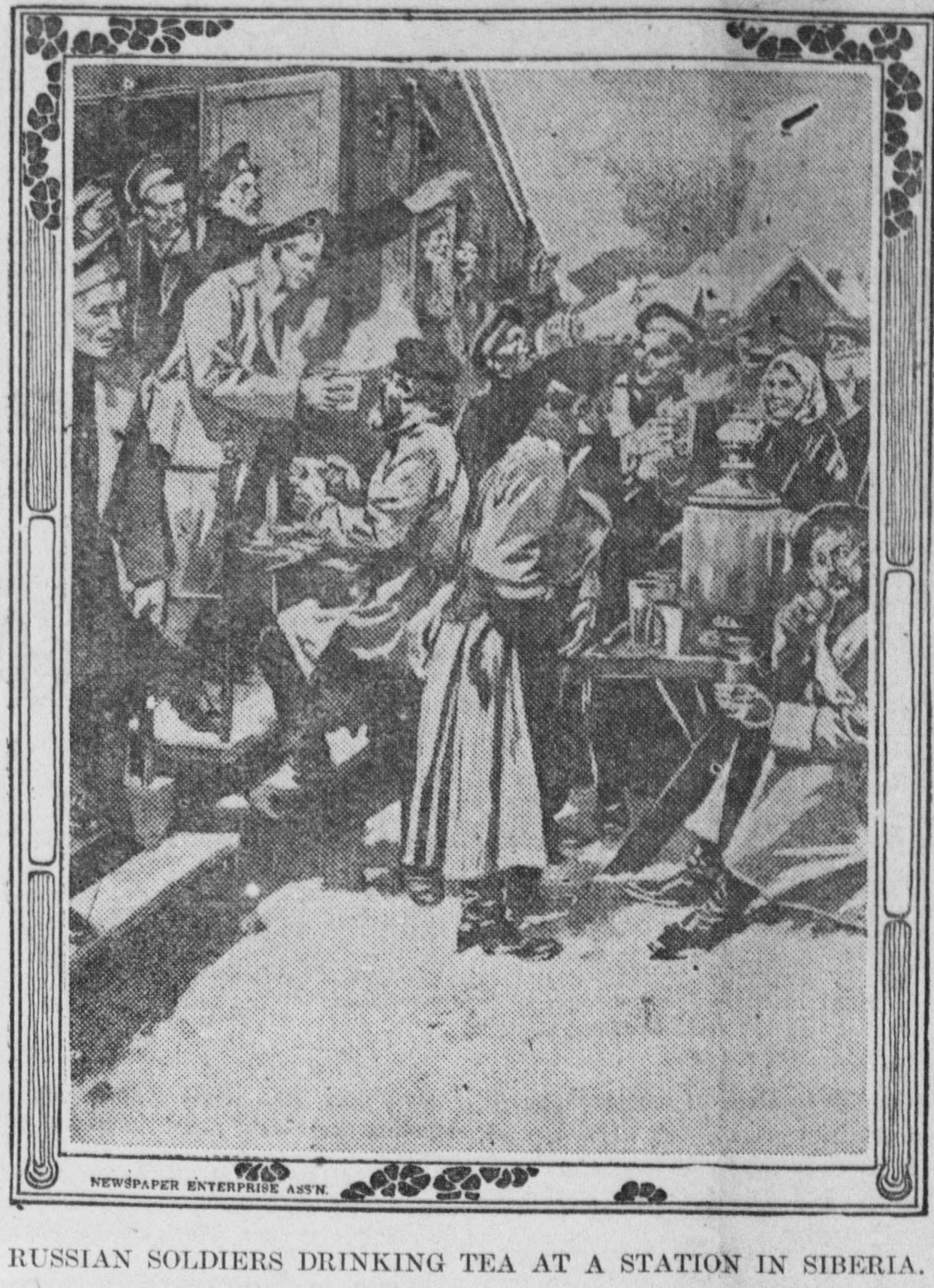
Either way, soldiers wanted it. Most of them were peasants who had grown up with tea at home and expected it in the army. A story written for peasant readers about the Russo-Turkish War of 1877 shows thirsty soldiers near a battlefield cheering when a comrade arrives carrying a samovar. Photographs from the Russo-Japanese War show the same thing: in 1904, troops heading east stopped at Trans-Siberian stations to drink tea.
1914: a whole country goes dry
When the First World War began, the government shut the liquor stores to keep soldiers sober during mobilization, haunted by reports of drunken troops in the war against Japan. It cost the treasury about a quarter of its annual revenue, roughly 700 million rubles. Tea was officially listed among wartime necessities, while coffee was not, and a March 1917 National Geographic photograph shows Russian officers gathered around a samovar at the front.
But Yoder argues the state never secured a reliable tea supply for its army. Tea ran short, prices climbed, and in some places peasants rioted when they could not get the fruit drops they liked to put in their tea. She suggests that the missing tea, in a small way, helped wear down soldiers’ loyalty to the tsar before the revolutions of 1905 and 1917. Tea did not beat vodka by decree. It won by becoming the drink Russians felt they were owed.
Vodka’s comeback: the “100 grams”
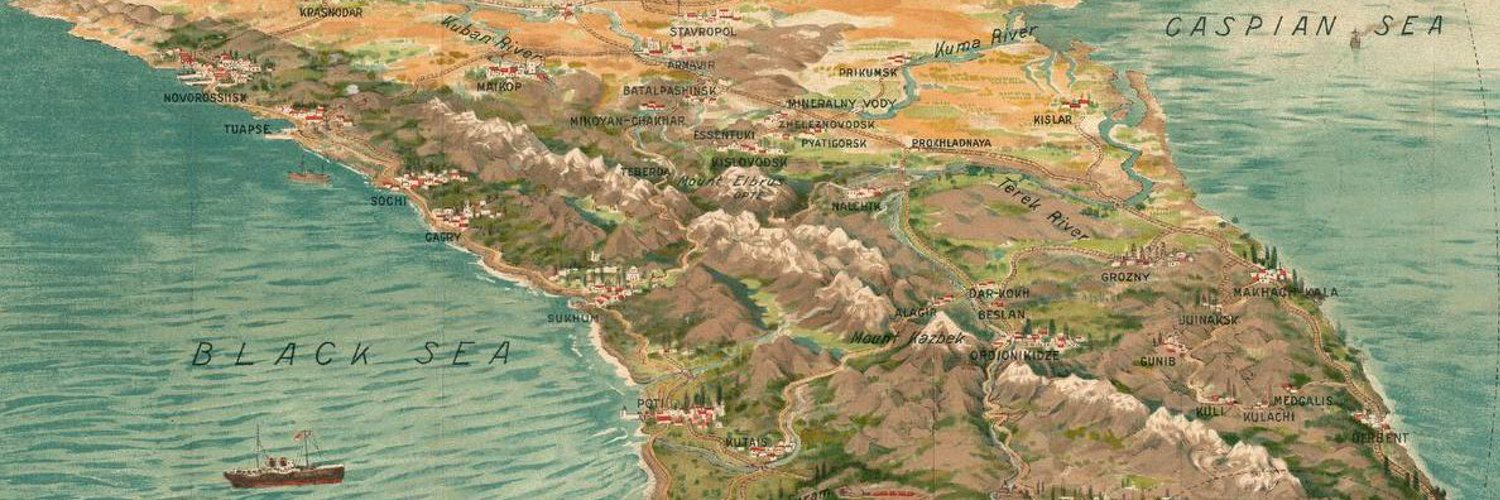
Vodka returned to the army only in a narrow form. During the bitter Winter War of 1940, Defense Commissar Kliment Voroshilov asked Stalin for a daily 100 grams for the troops. In August 1941, Decree No. 562 made it official for frontline units only. On the Transcaucasian Front, soldiers received port or table wine instead, in keeping with local tradition.
What to drink with this story
Brew a strong black tea as a concentrate, top it up with hot water from the samovar or kettle, and stir in a spoon of sugar: the cup Russian soldiers asked for. Or find a Krasnodar tea, grown on Russia’s Black Sea coast in the old Kuban Cossack lands, and drink to the Cossacks with the tea they never wanted.
More on Russian tea: Interesting Tea Facts Around the World: Focus on Russia and Small Objects, Grand Rituals: Russian Tea Antiques.
Sources
- Audra Jo Yoder, Tea Time in Romanov Russia: A Cultural History, 1616–1917, PhD dissertation, University of North Carolina at Chapel Hill (2016)
- Boris Kondakov, Ivan Burdin, Svetlana Burdina and Li Shuang, “Concept of ‘Tea’ in Russian Culture”, SHS Web of Conferences 164 (2023)
- Samovars in the Snow: The Rise of a Distinctively Russian Tea Culture, Liberty University Research Week poster
- Soldiers’ food in the Russian army at the turn of the 20th century, Wrocławskie Studia Wschodnie 15 (2011)
- Photograph of Russian Army Officers Taking Tea, Digital History Reader, Virginia Tech (from National Geographic, March 1917)
- Alcohol motivation in the Red Army, Valka.cz
- Alexander Pushkin, The Captain’s Daughter (1836); Leo Tolstoy, The Cossacks (1863)