Small Objects, Grand Rituals: A Curated Selection of Russian Tea Antiques
This post contains affiliate links. If you buy through them, I may earn a small commission at no extra cost to you. I only recommend things I genuinely use or love.
Russian tea antiques are the objects made for the samovar table from the 19th century onward: the samovar itself, silver tea caddies, glass holders called podstakanniki, and spoons and strainers in cloisonné enamel. They were everyday tools made as decorative art. This is a small selection of pieces still for sale, with a note on what each was used for.
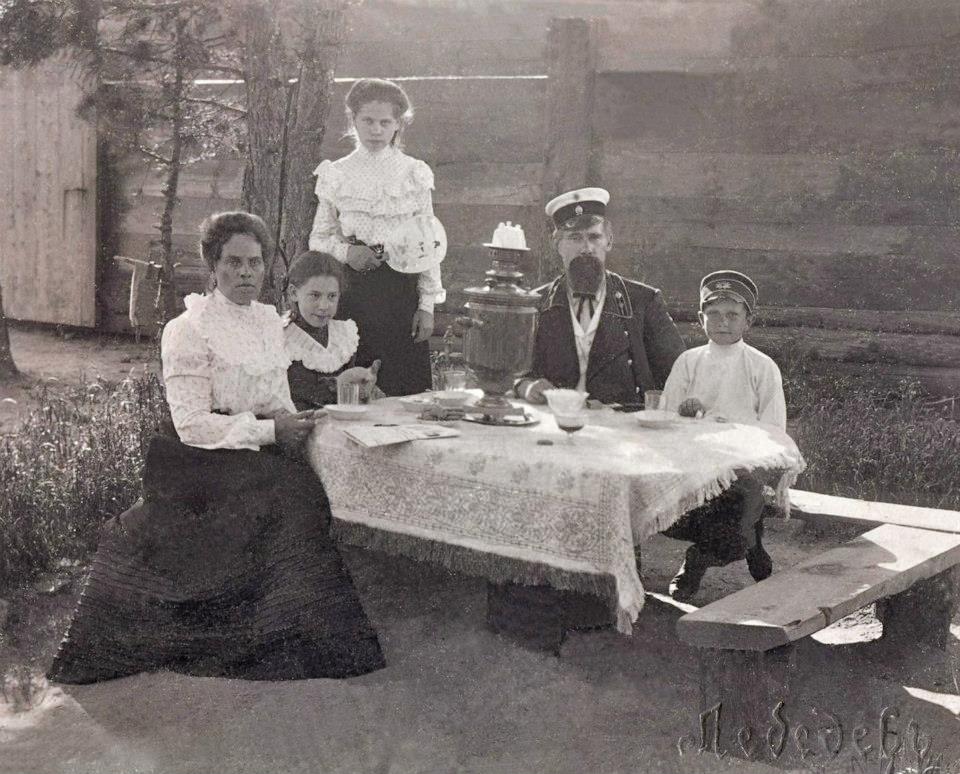
Years ago, when my family and I made the courageous move from Russia (Soviet Union then), to the West, one of the prized family heirlooms was a Samovar that belonged to our family. I believe the one that’s sitting in front of my grandfather is the exact same.

Recently I came across a site selling such samovars and teaware from Russia. From miniature tea canisters to imposing samovars, these pieces show how tea in Imperial Russia blurred daily ritual with decorative art. Here are several favorites that you can actually still buy for a mere sum.
I’ve gathered a small selection of late‑19th and early‑20th‑century Russian tea objects. You have engraved silver and enamel canisters, a silver‑gilt enamel tea set, and a large brass samovar. All to show how craftsmen turned tea storage and service into miniature masterpieces and theatrical centerpieces. Each object has its own story, but they reveal something deeply Russian. To read more about Russian Tea Culture, click here.
What is a samovar?
A samovar is a metal urn that heats water for tea. A small teapot of strong concentrate sits on top, and each cup is diluted from the samovar’s tap. It was the centre of the Russian tea table.
Featured items
Vintage Russian Silver Cloisonné Enamel Tea Spoon Gilt Twisted Stem

A silver-gilt spoon decorated with cloisonné enamel and finished with a twisted stem. Spoons like this were used at the tea table for sugar and jam.
Circa 1910 Russian Samovar

A brass samovar from around 1910. The body holds the hot water and the tap at the front fills each glass.
Antique Russian Brass Plated Metal Samovar

A brass-plated samovar with side handles and a tap. Pieces like this were the working centre of the household tea table.
Antique 19th Century Russian 84 Silver and Crystal Tea Glass Holder

A podstakannik in 84-standard silver holding a cut-crystal glass. Tea in Russia was traditionally served in a glass set in a metal holder like this one.
1890s Russian Silver Tea Caddy

An engraved silver tea caddy from the 1890s. Caddies kept loose tea dry and close at hand next to the samovar.
Russian Cloisonné Enamel Tea Set

A cloisonné enamel tea set in its fitted presentation case. Sets like this were made as gifts and for display as much as for use.
1970s Russian Silver Gilt and Polychrome Cloisonné Enamel Tea Strainer

A silver-gilt strainer with polychrome cloisonné enamel, dated to the 1970s. It sits over the glass to catch the leaves as the tea is poured.
Frequently asked questions
A metal holder with a handle for a hot tea glass.
It is the old Russian purity mark: 84 zolotniks out of 96, or 87.5 percent silver.
Many are sold as decorative pieces. Ask the seller about the interior lining before using one for water.
Read next
- Russian tea culture — history and samovar traditions
- The kombucha “mushroom” — from Russia to an art experiment
- Le Comptoir Florian, Brussels — a quiet tea house that feels like a secret
New here? Start Here for the shortest path through the blog.