Butter Tea Around the World: From Tibetan Po Cha to Kalmyk Jomba
Tea with butter and salt, from Tibet and Bhutan to Ladakh, Mongolia and Kalmykia in Russia: what each place calls it and how to make it at home.
Butter tea is tea with butter and salt in it. No sugar, no lemon. It tastes more like a light soup than a cup of tea, and across the high, cold middle of Asia it is the drink people start the day with. Every country makes it a little differently, and some of the versions are not even called butter tea. Here is how it is made from Tibet and Bhutan to Mongolia and the Volga.
Some product links in this post go through my ShopMy shop and may earn me a small commission, at no extra cost to you.
Why put butter and salt in tea?
Because of the cold. In the mountains and on the steppe, a hot drink full of fat gives you warmth and energy for hours. The butter is also said to protect lips from cracking in the dry wind. Salt makes it taste like food, and in the mountains it is treated almost like food.
None of these places grew their own tea. Instead, it came from China as hard, dark bricks that survived months on the backs of porters, yaks and camels. According to Wikipedia, tea reached Tibet by the 7th century, and butter tea became popular around the 13th century.
Tibet: po cha, “churned tea”
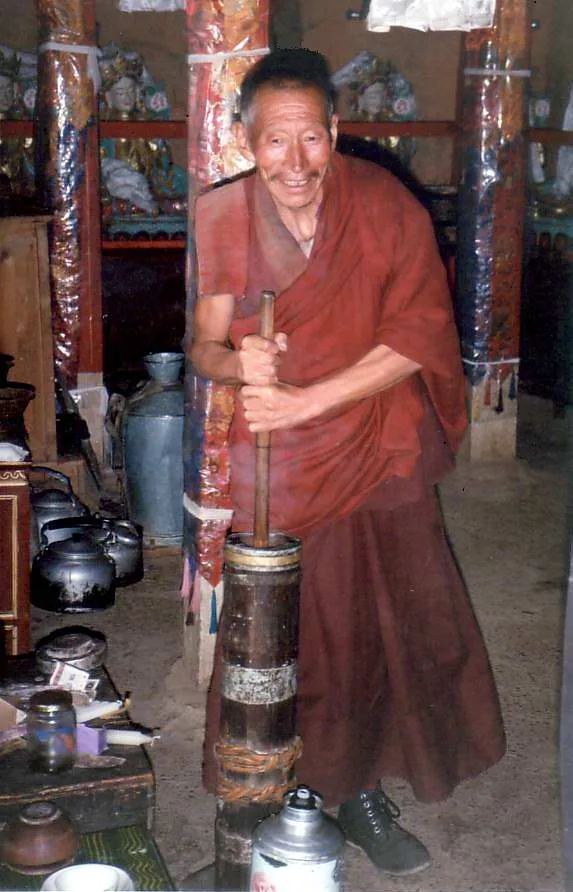
In Tibet, butter tea is called po cha or bod ja, “Tibetan tea”, and also cha süma, “churned tea”. The old way is to boil dark tea for a long time, sometimes half a day, until it is almost black. Then it goes into a tall wooden churn with yak butter and salt, and someone pumps the churn until the tea turns smooth and creamy.
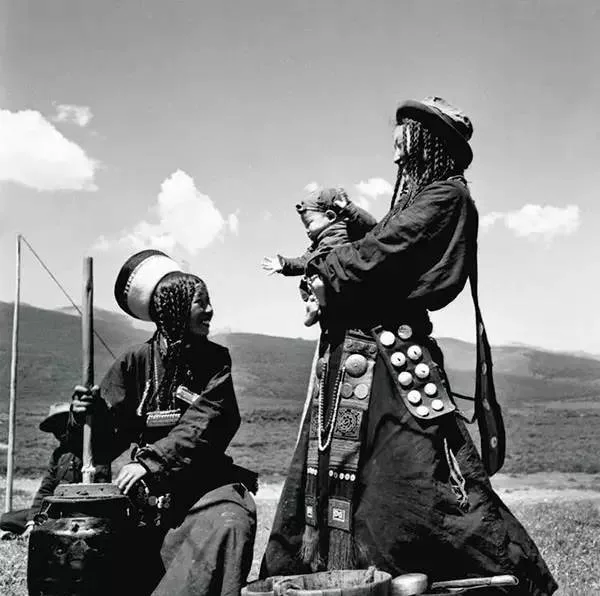
Today, however, many families use cow’s butter, tea bags and a blender instead. Tibetans also drink a lot of it, many small bowls a day, often with tsampa, roasted barley flour that people mix into the tea or eat alongside.
There is also an etiquette. For example, the host refills a guest’s bowl after every sip, so it is never empty. If you do not want more, you leave the bowl untouched, and then drink it all when you leave.
Bhutan: suja
In Bhutan, the drink is suja, again meaning “churned tea”, in Dzongkha. Hosts make it with tea, butter and salt, and it is usually the first thing they offer a guest. According to Taste of Bhutan, it comes with zao, puffed rice roasted with butter and sugar, and the host pours it for the oldest guest first and the youngest last.
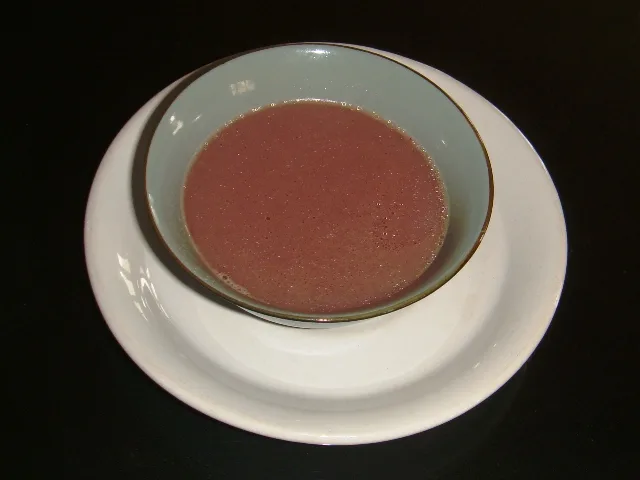
Bhutan also has a sweet milk tea, ngaja, so a host may ask which one you want. According to the Bhutan tourism board, both come with puffed rice or pounded corn.
Ladakh: gur gur cha
In Ladakh, in the far north of India, people call it gur gur cha. The name comes from the gurgling sound the churn makes. Ladakhis usually drink it with tsampa or with khambir, the local bread.
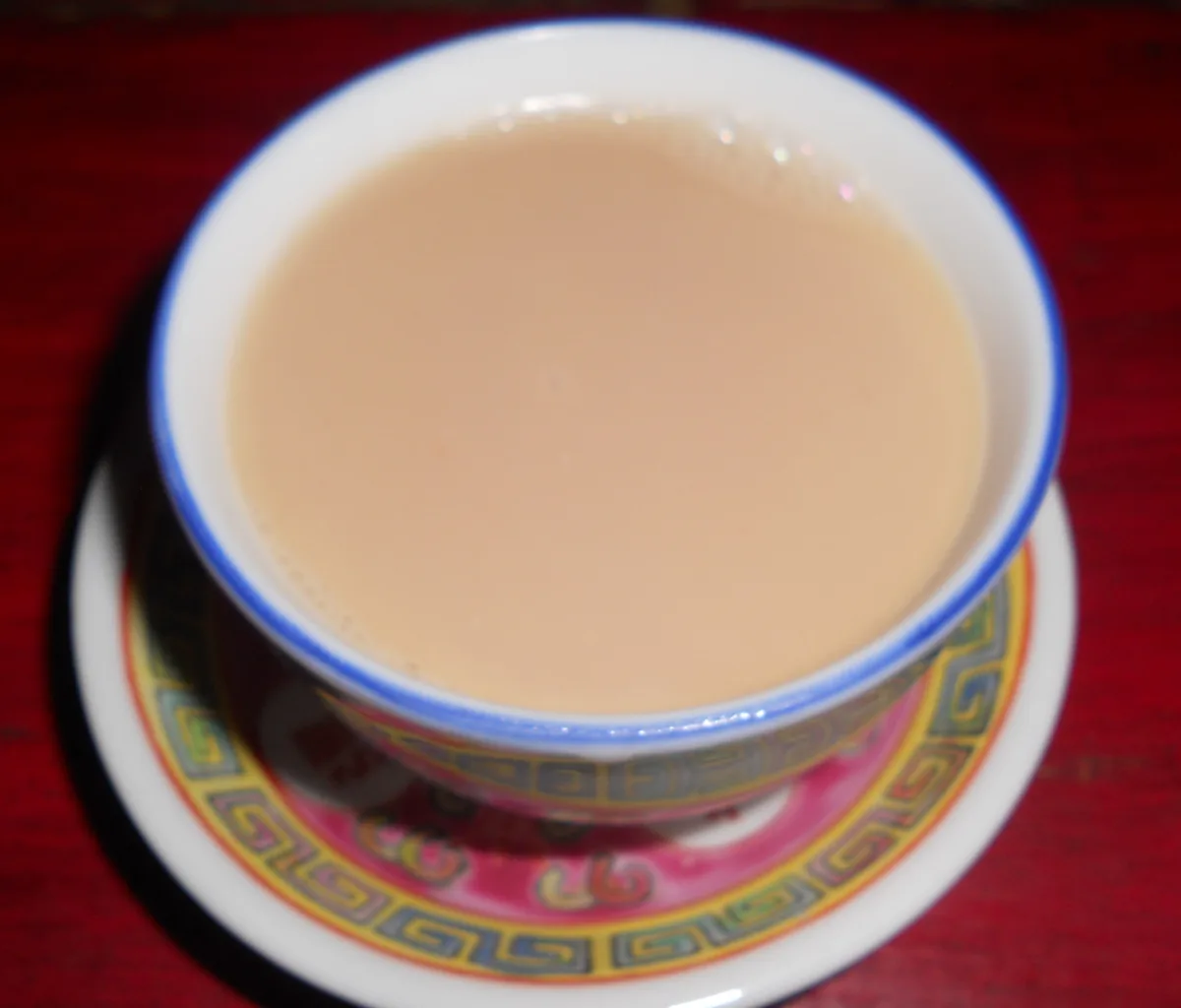
Down to Earth magazine met a tea seller in Leh who said that in winter, when everything closes, people sit with a flask of gur gur cha and knit socks. People also drink it higher up in Himachal Pradesh, in Kinnaur and Lahaul-Spiti.
Nepal: the Sherpa cup
In the Himalayan villages of Nepal, the Sherpas call it su chya or phe chya. Families serve it to visitors, and also at important moments of life: at a Sherpa funeral, the family welcomes guests into the house with a cup of butter tea.
Mongolia: suutei tsai, and the first Russian cup of tea
Mongolian tea, on the other hand, is a little different. Suutei tsai is made with water, milk, tea from a pressed block, and salt. Some families add butter or other fat, and sometimes fried millet. The traditional way to mix it is to scoop up the boiling tea with a ladle and pour it back from a height.
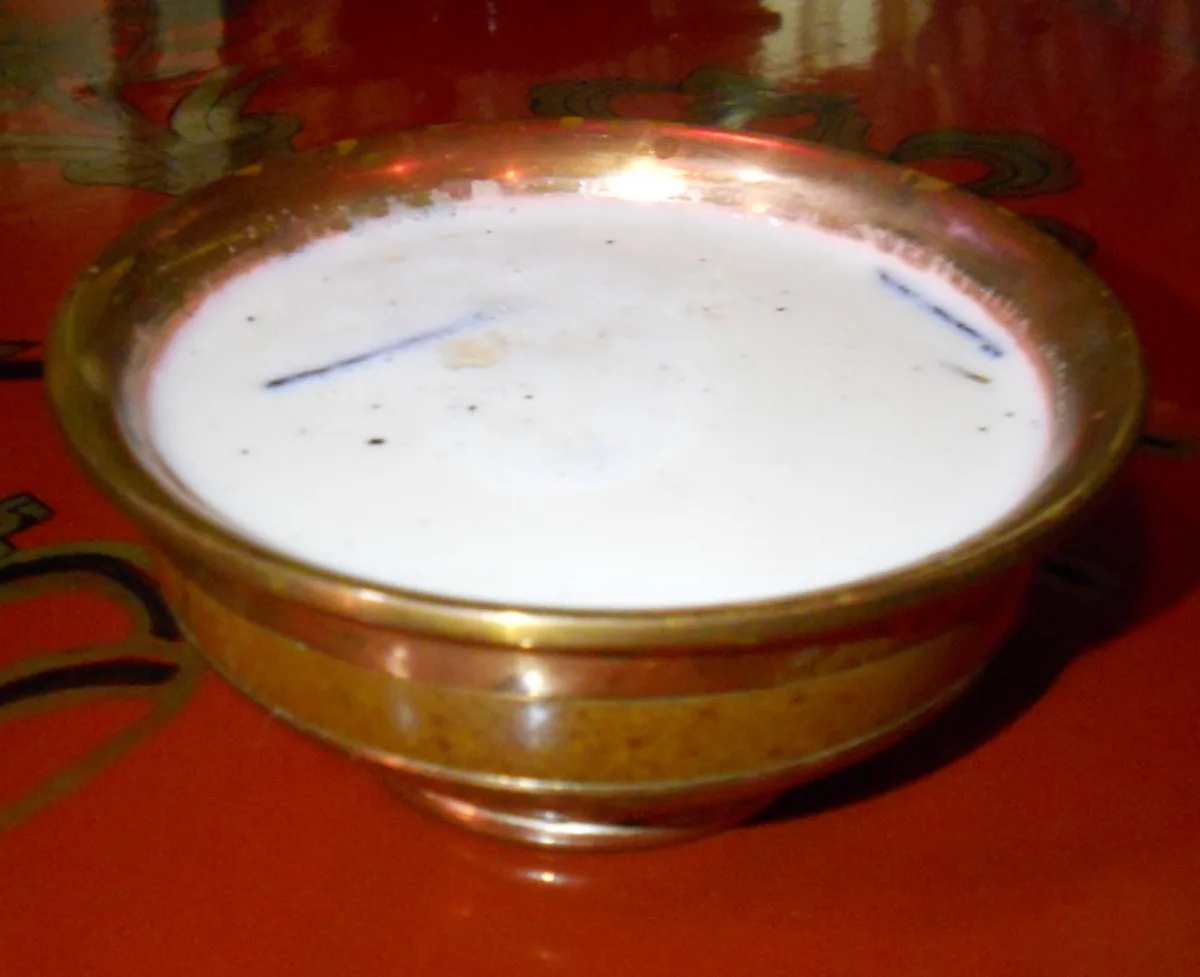
Hosts serve it to anyone who walks into a ger, often with a bowl of fried biscuits. And it has a very old reputation. In the 13th century, the friar William of Rubruck noticed that the Mongols were “most careful not to drink pure water.”
This is also how Russia first met tea. In 1616, a Cossack named Vasilii Tiumenets was sent from Siberia to the court of the Altan Khan in Mongolia. There the Mongols gave him “a drink of milk boiled with butter and some kind of unfamiliar leaves”. That was Mongolian butter tea. The whole story is in What Cossacks and Russian Soldiers Really Drank.
Kalmykia: jomba, butter tea in Europe
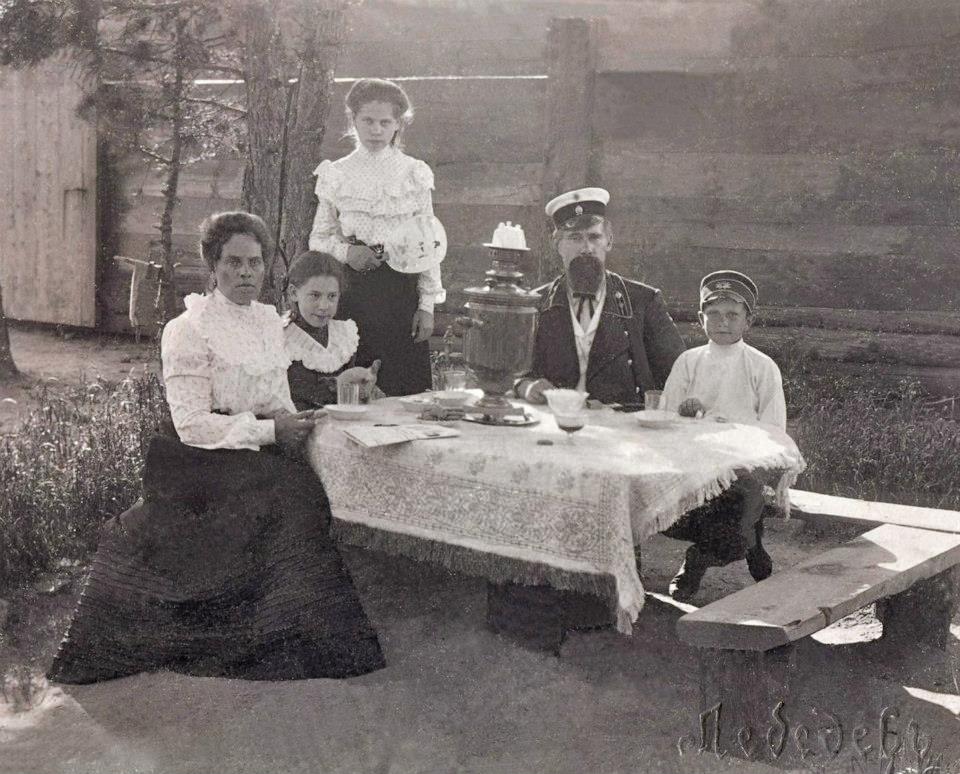
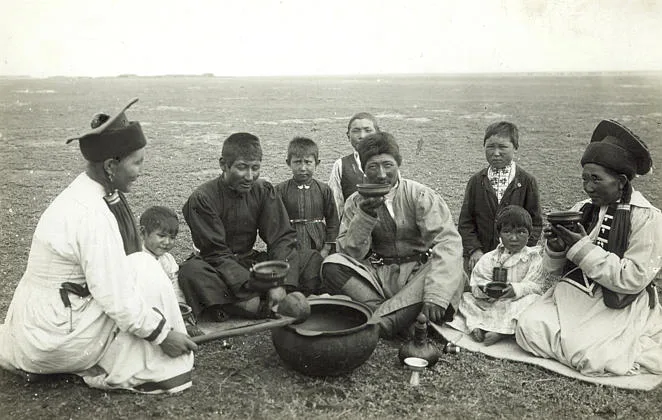
The Kalmyks are a Buddhist people of Mongol origin who settled on the Volga in the 1600s, in what is now southern Russia. That makes their tea the only butter tea native to Europe. They call it jomba or khalmg tsä. The photo at the top of this post shows a Kalmyk family drinking tea on the steppe in the late 19th century, in the lands of the Don Cossacks.
Jomba is made with pressed tea, milk, butter and salt, and finished with grated nutmeg. Some cooks add bay leaf or black pepper. In the past, families kept the tea bricks in a leather bag and cut them with a knife.
The Kalmyk Cultural Heritage project at the University of Cambridge recorded Kalmyk women making it, and every family has its own habits. One stirs it 99 times, another 108 times. In one family, the first cup goes to the elders. In another, a spoonful is sprinkled as an offering before anyone drinks.
A cousin in Kashmir: noon chai
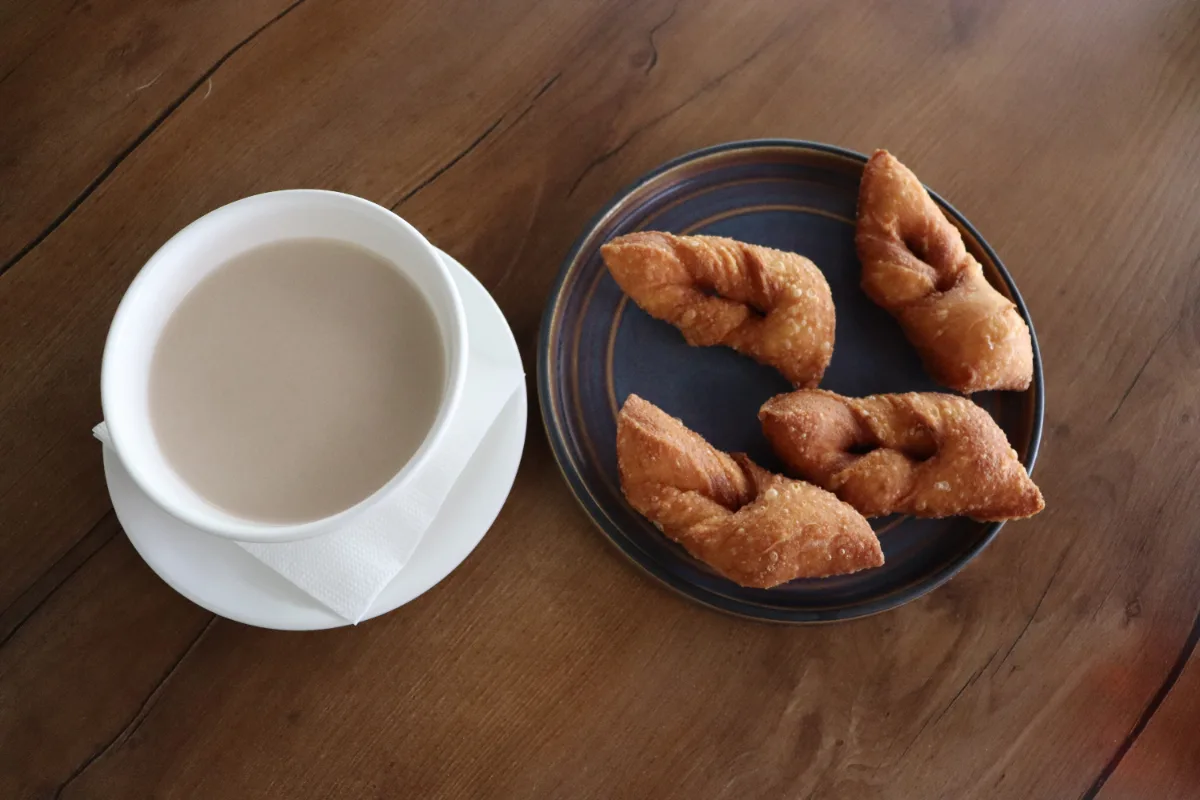
Kashmir has its own salty tea, noon chai. “Noon” means salt. First, green tea boils with a pinch of baking soda, which turns it pink once milk goes in. Then it gets salt, sometimes butter or cream on top, and it is often brewed in a samovar. According to Outlook Traveller, on the other side of the Zojila pass, in Ladakh, the same kind of salted tea becomes gur gur cha.
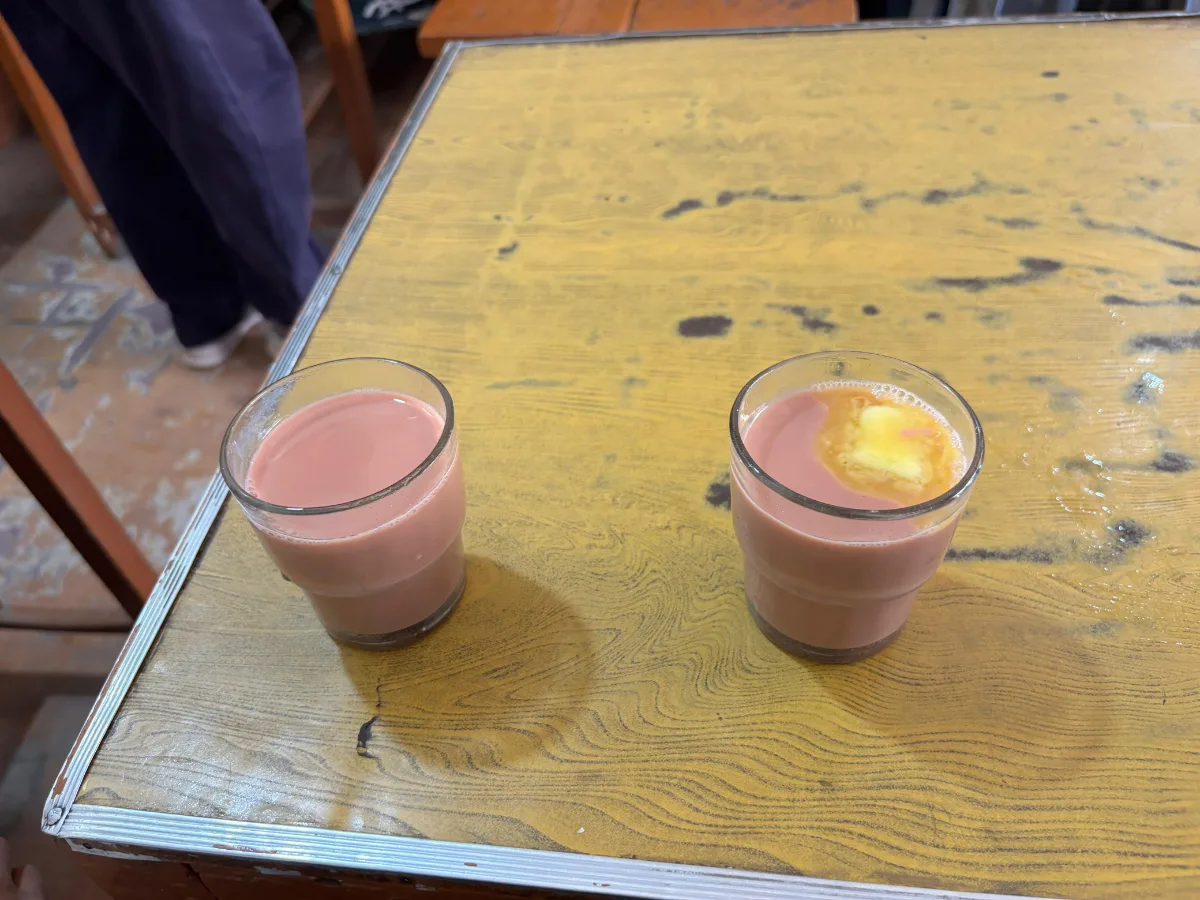
Finally, salty tea with butter in some form is also common in Pakistan’s Gilgit-Baltistan, Afghanistan, Central Asia and among the Uyghurs of Xinjiang, who call it etken chay.
All the versions at a glance
- Tibet: po cha. Dark tea, yak butter, salt, churned.
- Bhutan: suja. Tea, butter, salt, with puffed rice.
- Ladakh: gur gur cha. Named after the sound of the churn.
- Nepal (Sherpa): su chya. Served to guests and at funerals.
- Mongolia: suutei tsai. Milk, salt, sometimes butter and millet.
- Kalmykia, Russia: jomba. Milk, butter, salt and nutmeg.
- Kashmir: noon chai. Pink salt tea with milk and baking soda.
How to make butter tea at home
You do not need a wooden churn. A blender, or a jar with a tight lid, does the job.
- Simmer 1 tablespoon of strong black tea, or a piece of brick tea or pu-erh, in 2 cups of water for 5 to 10 minutes. It should be very dark.
- Strain the tea. Add a splash of milk if you like.
- Add 1 to 2 tablespoons of butter and a good pinch of salt, about ¼ teaspoon.
- Blend for 30 seconds, or shake in a closed jar, until it is foamy.
- For the Kalmyk version, use green tea and milk instead, and finish with a little grated nutmeg.
For the tea, a malty Assam such as DONA’s Amber Assam works well if you cannot find brick tea.
Questions about butter tea
Tea mixed with butter and salt, drunk in Tibet, Bhutan, Ladakh, Nepal, Mongolia, Kalmykia and other cold, high places of Asia. It is usually made with strong dark tea and churned or blended until smooth.
Salty, creamy and rich, closer to a light broth than to a sweet cup of tea.
Tibetan po cha is dark tea churned with yak butter and salt. Mongolian suutei tsai is made with milk, water, tea and salt, with butter or millet only sometimes added.
Yes. The Kalmyks of southern Russia make jomba, a salty tea with milk, butter and nutmeg. And the first Russian known to have tasted tea, the Cossack Vasilii Tiumenets, was served Mongolian tea with milk and butter in 1616.
Read next
- What Cossacks and Russian soldiers really drank: the Cossack who first tasted tea in Mongolia
- Tea facts around the world: Russia
- Sagan Dayla: the Siberian rhododendron tea
- Tea vs cha: why the world says tea, cha or chai
Sources
- Wikipedia articles on po cha and Suutei tsai
- “The traditional Bhutanese tea, the yak butter tea”, Taste of Bhutan
- Food and drink, Bhutan tourism (bhutan.travel)
- “A spoonful of salt, butter”, Down to Earth
- “Buttered brew from Ladakh: gur-gur chai”, Outlook Traveller
- Kalmyk Cultural Heritage Documentation Project, University of Cambridge (recordings on Kalmyk tea)
- Top image: Kalmyks drinking tea on the steppe of the Salsk district, in the old Don Cossack lands, late 19th century, unknown photographer, via Wikimedia Commons, public domain